

- Home
- Epoxy Floor Coatings
- Garage Floors
How We Coat a Garage Floor
Flake epoxy over a ground and repaired slab, finished with a polyaspartic top coat on every garage floor. Built for road salt, hot tires and Chicago winters.
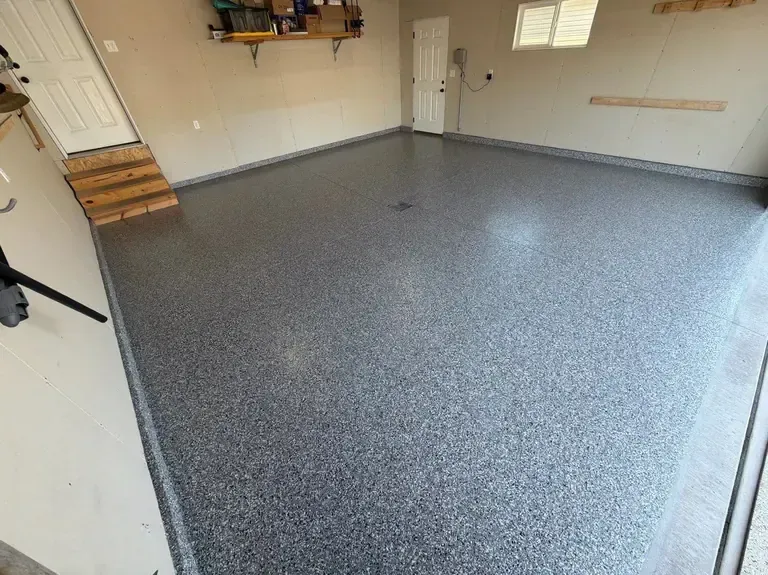
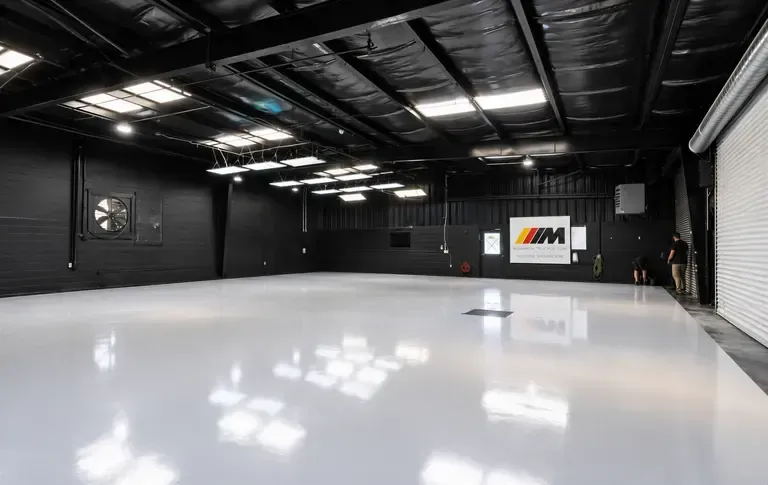
Built for Chicago winters
A garage floor that handles salt.
Chicago-area concrete goes through roughly 80 to 100 freeze-thaw cycles every winter. Water gets into pores and small cracks, freezes, expands and breaks the surface down, and de-icing salt carried in on tires speeds it up.
A flake epoxy system seals the slab before that water ever has the chance to freeze. It stands up to hot tires, dropped tools and daily use, and it cleans with a sweep, a mop or a hose.
This page walks through how we coat a garage. For the full service, see our epoxy floor coatings in Chicago.
Garage floors
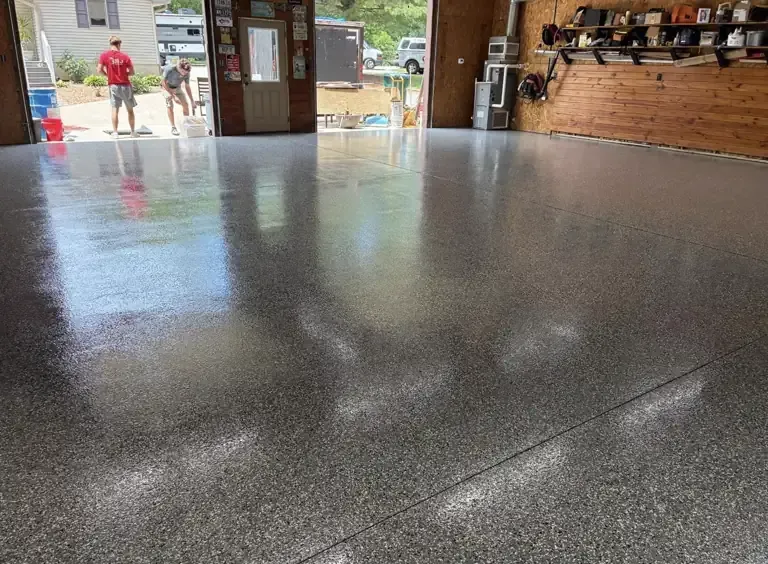
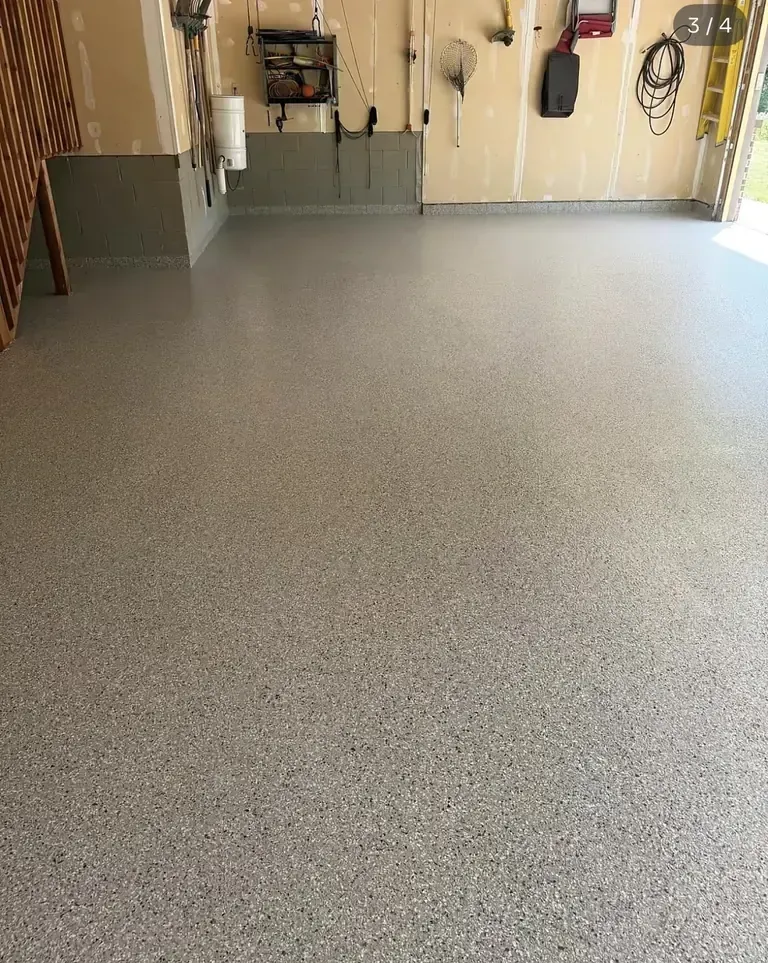
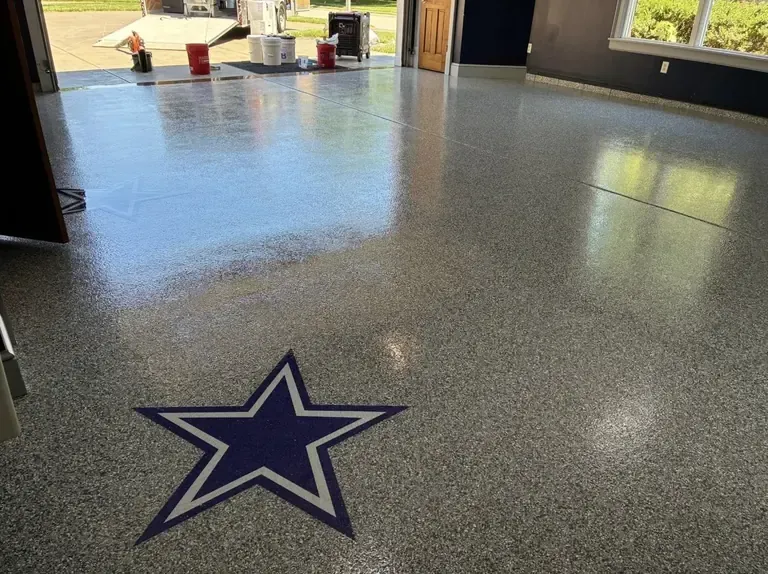
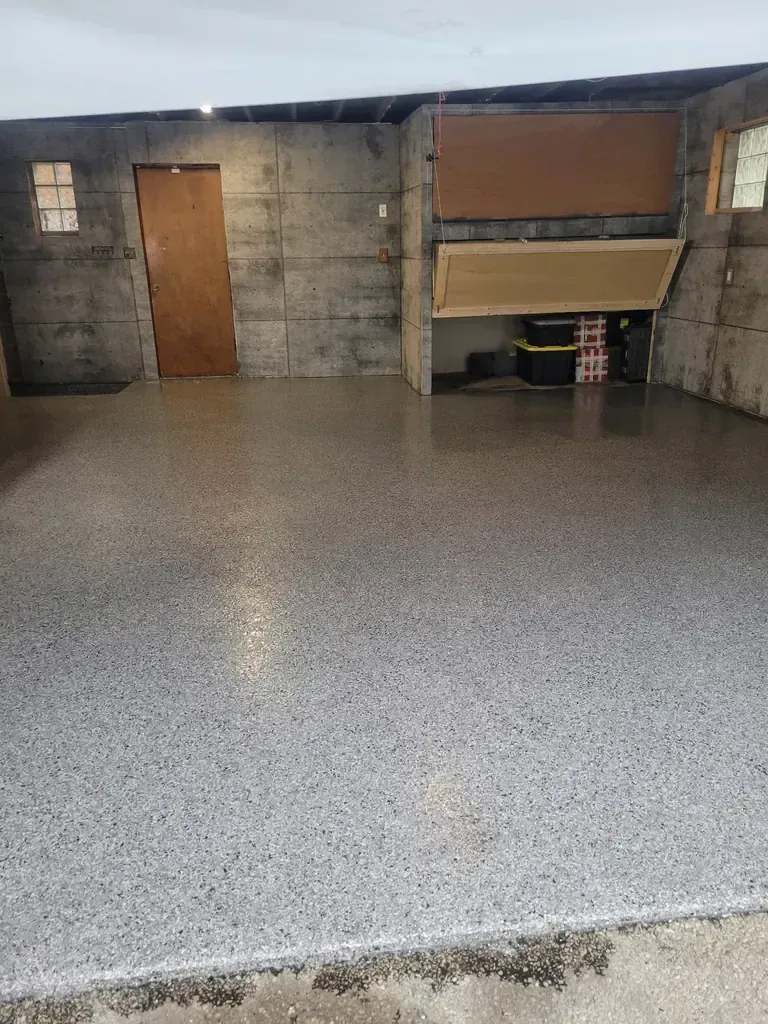
Recent garages.
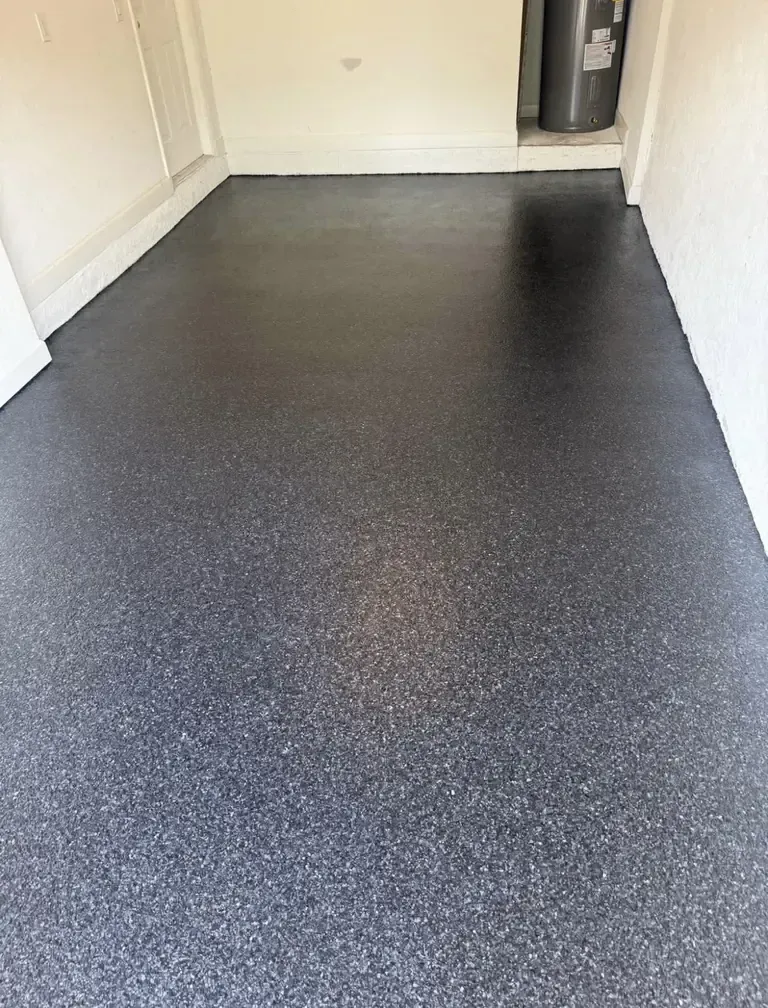
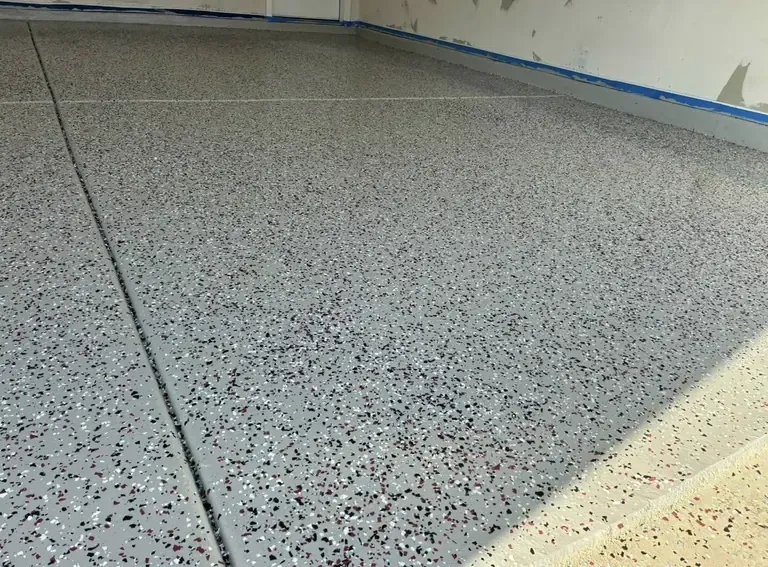
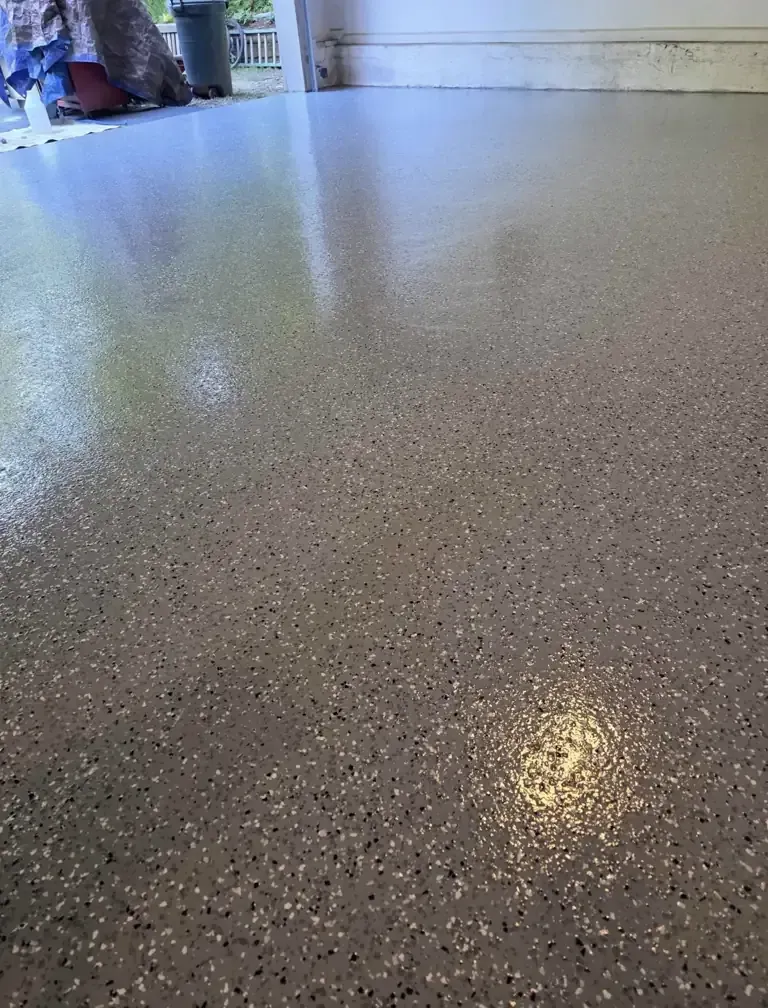
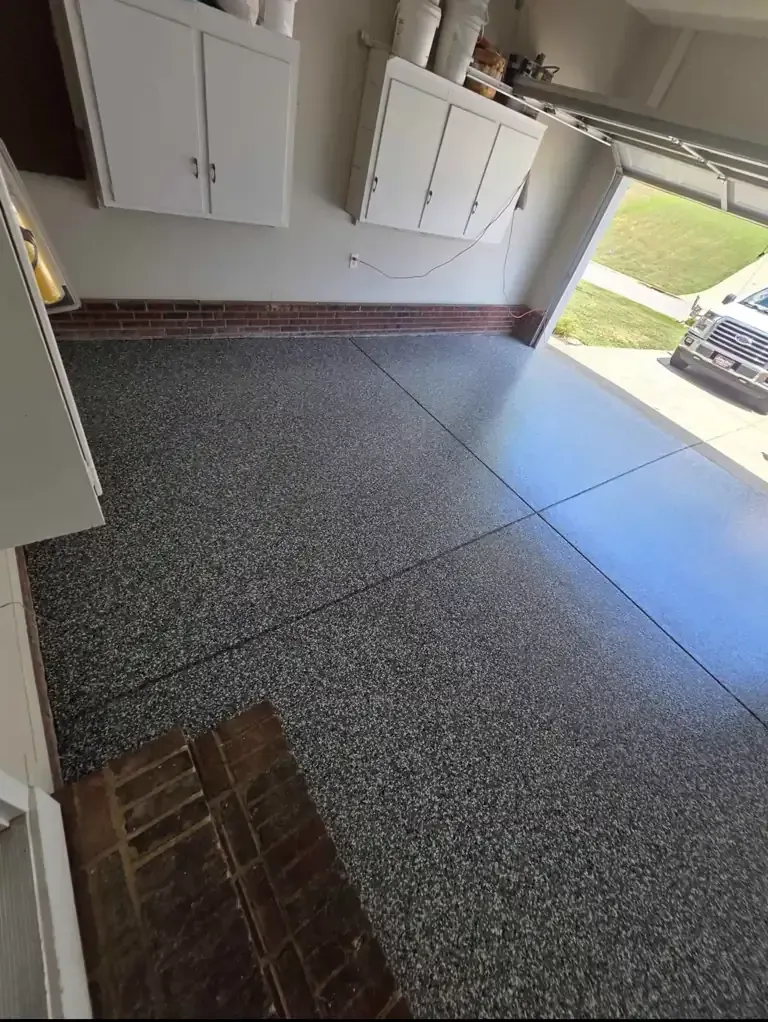
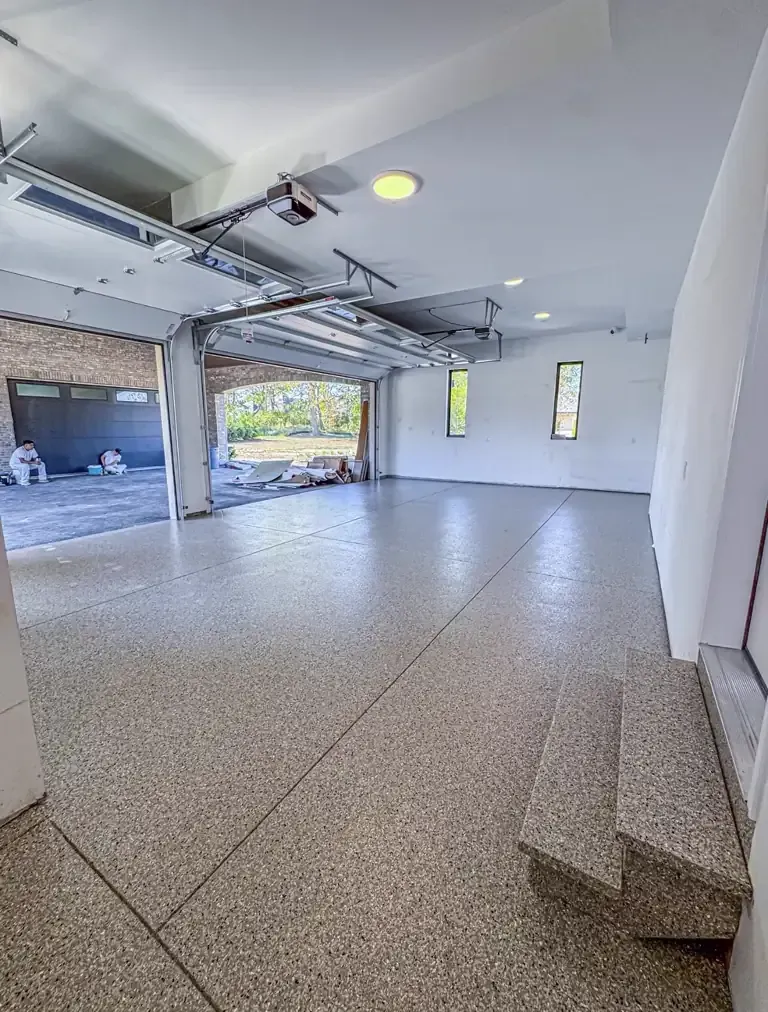
Our garage system
Five steps, every garage.
The prep decides whether a coating lasts 15 years or starts lifting in 15 months, so that is where we spend the time.
- Inspect the slab
We check the concrete for cracks, moisture and any old coatings or sealers that need to come off first.
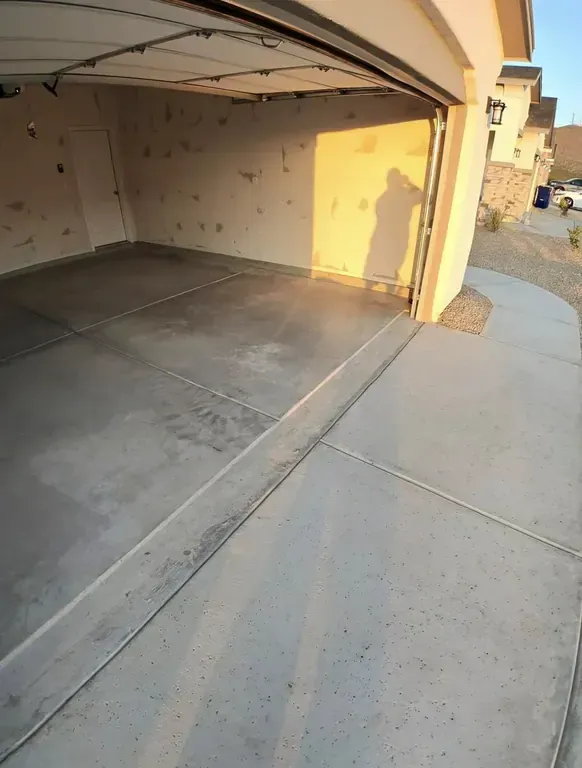
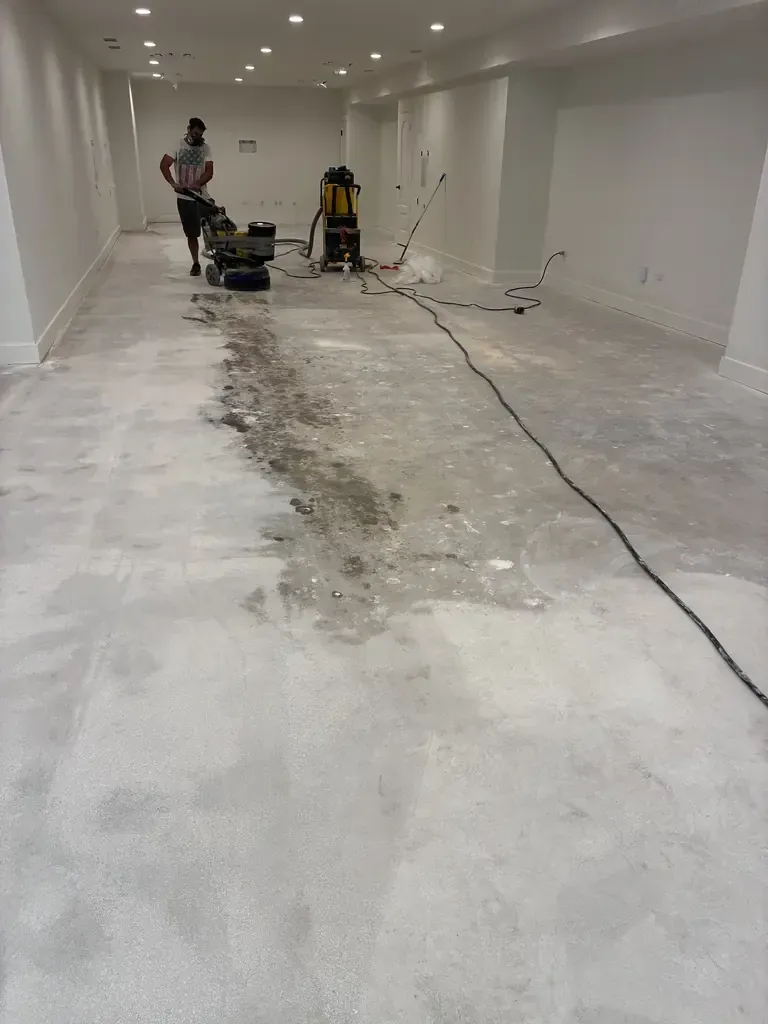
- Grind and profile
Diamond grinding opens the surface and removes contaminants an etch would leave behind.
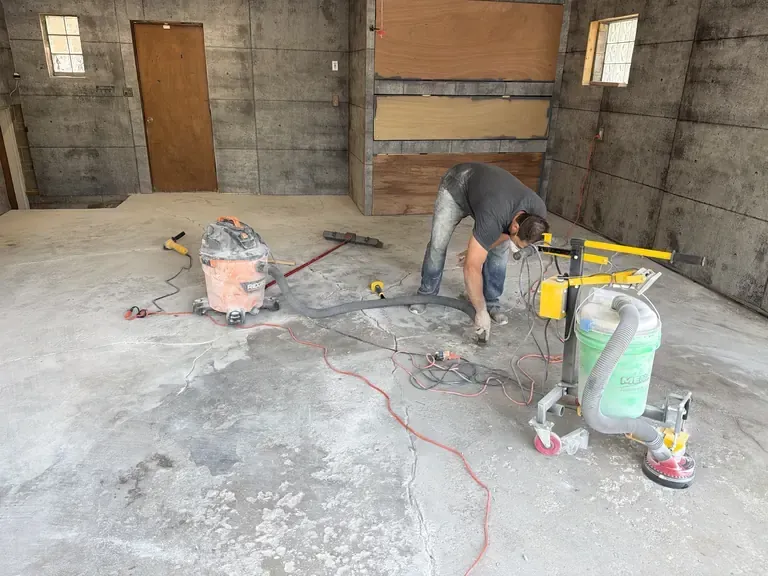
- Repair and prime
Cracks and pitting are filled, and a primer coat locks in adhesion before any color goes down.
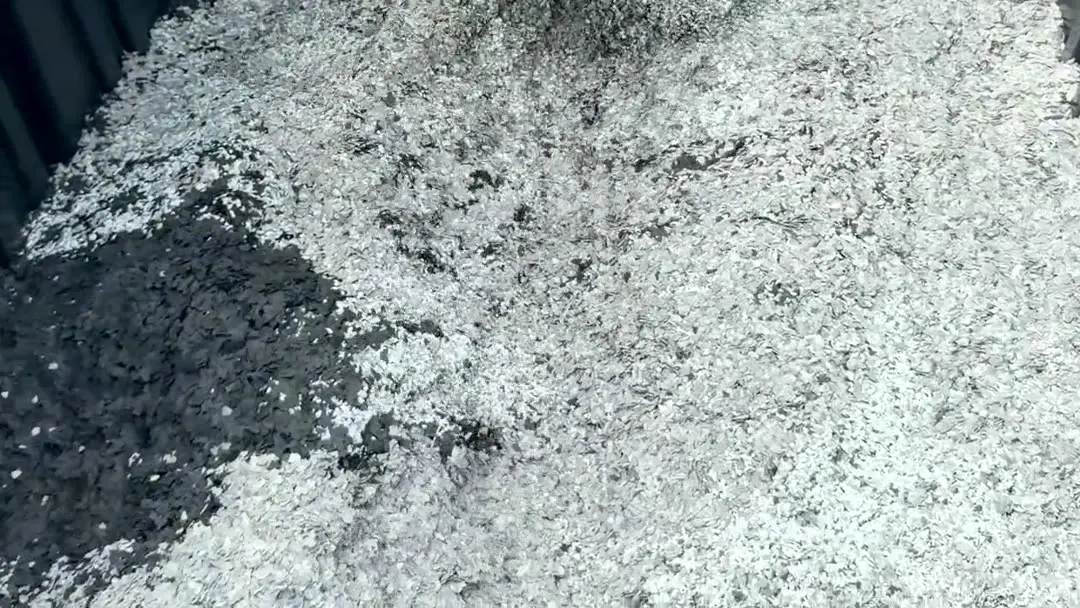
- Base coat and flake
The base coat goes down and the flake blend is broadcast into it while it is wet.
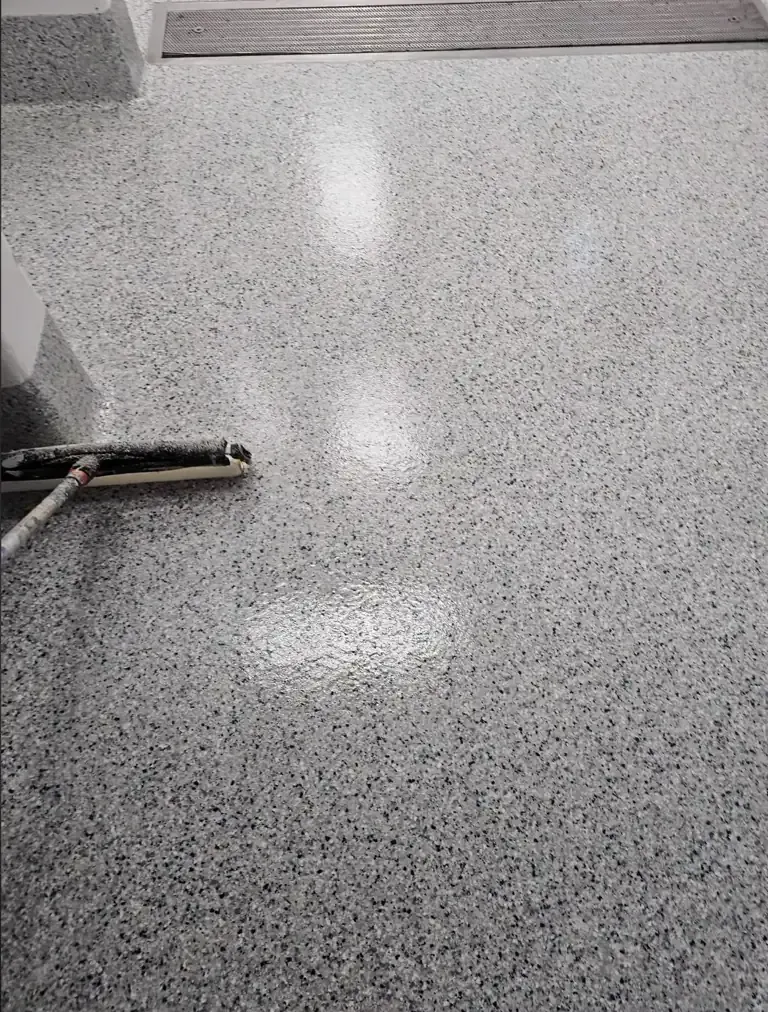
- Polyaspartic top coat
A UV-resistant polyaspartic top coat seals the system. It is standard on every garage floor we coat.
Cost
What it costs.
For the most common project, a standard 2-car garage of about 400 to 500 square feet typically runs roughly $2,500 to $4,000 installed , depending on the system and how much prep the slab needs.
Every price is all-in with surface prep, base coat and top coat, and your free estimate gives you the exact figure. Per-square-foot ranges for each system are in our cost guide.
Finish options
Flake for working garages, metallic for show.
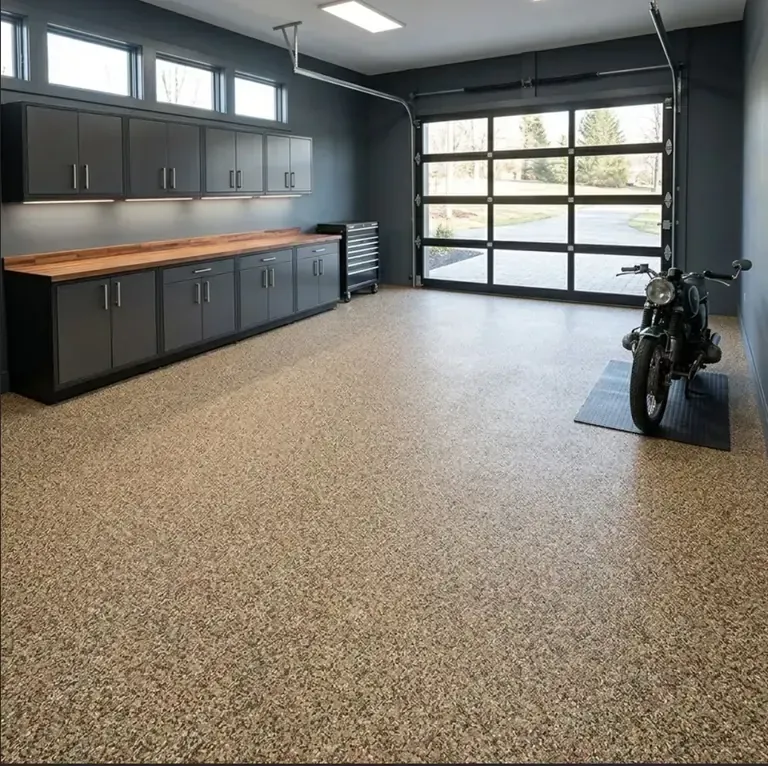
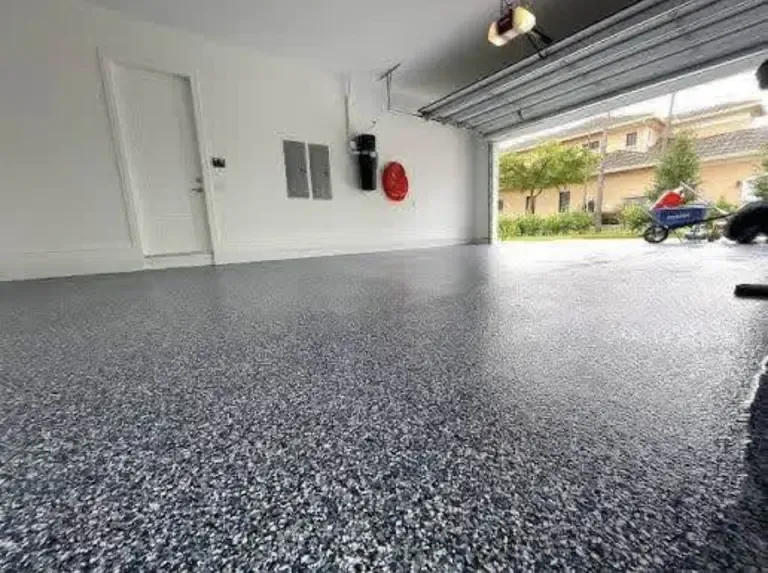
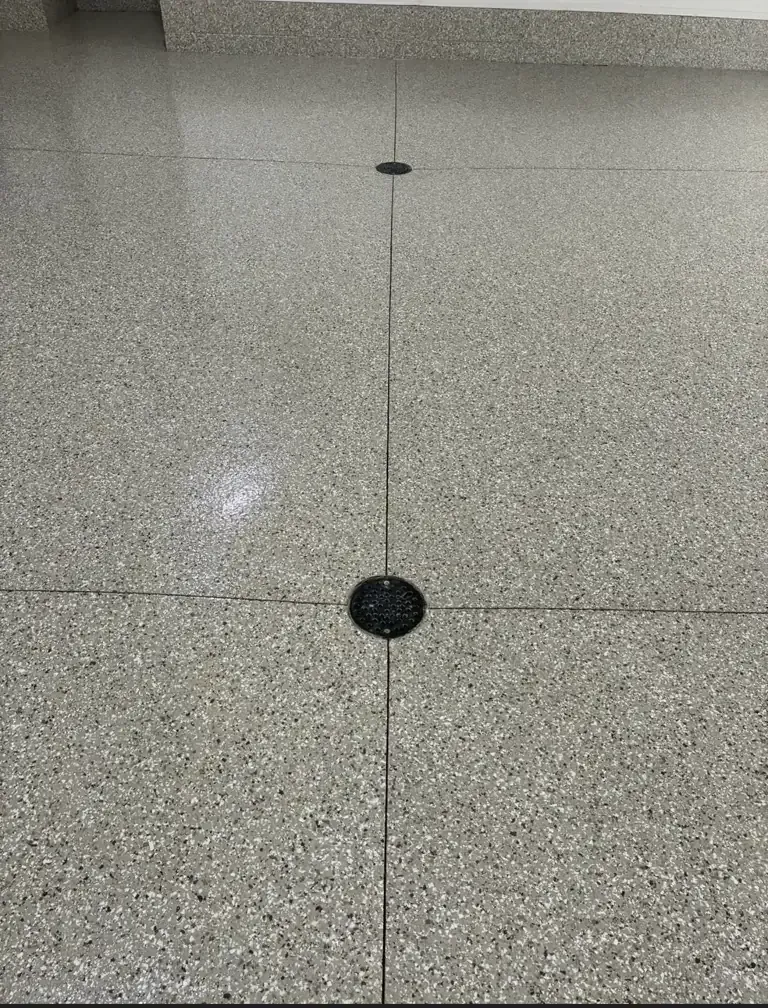
Flake is the standard for most garages: forgiving, durable and available in hundreds of color blends. Browse 550+ flake colors or try them on a photo of your floor.
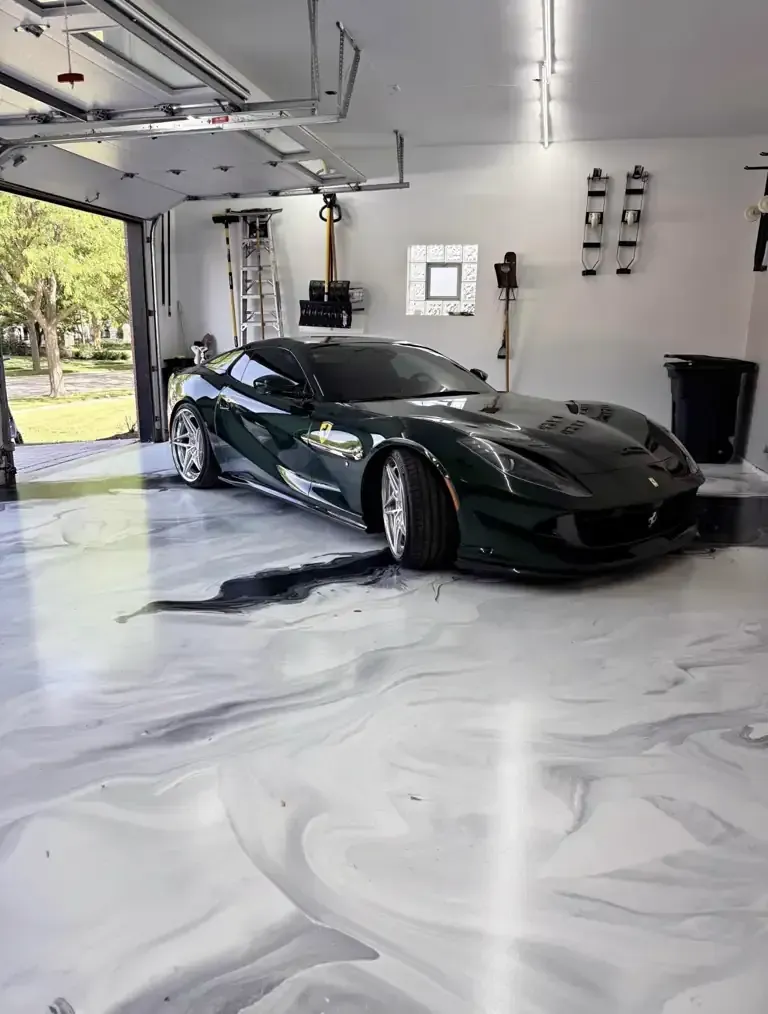
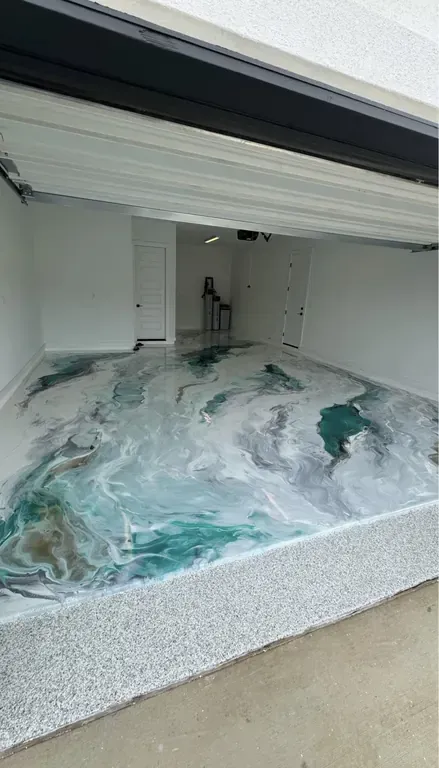
For a show garage or a man cave where the floor is part of the look, a hand-poured metallic finish gives a marbled, high-gloss result no other floor shares.
Questions
Straight answers.
Still deciding? Call or text (224) 321-2395 and talk to the people who will actually do the work.
How much does it cost to coat a 2-car garage floor?
A standard 2-car garage of about 400 to 500 square feet typically runs roughly $2,500 to $4,000 installed for a flake floor, depending on how much repair the slab needs. The polyaspartic top coat is included on every garage floor.
How soon can I walk and park on my new garage floor?
Cure times depend on the system and the weather, but most residential epoxy floors are ready for foot traffic within about 24 hours and vehicle traffic within a few days. We confirm the exact timeline for your floor at the final walkthrough.
Will a garage floor coating hold up to road salt?
Yes. A correctly installed system seals the concrete so moisture from snow melt and road salt cannot get in and freeze, which is the main way Chicago garage floors crack and flake. The coating also resists the salt and chemical exposure that comes with winter traffic.
Do you grind the garage floor or just acid etch it?
We mechanically grind and profile the concrete rather than relying on a light acid etch. Older Chicago slabs with freeze-thaw wear, sealers or oil staining need a mechanical profile so the coating has something to grip.
Which finish is best for a garage?
For most Chicago garages a flake system is the best finish: the color chips add grip and hide minor cracks, tire marks and stains. A metallic finish is usually chosen for show garages and living spaces rather than a working garage.
Related
Keep exploring.
Garage floors
What a garage floor has to survive in Chicago
A garage floor coating from Fine Services is a full-broadcast flake epoxy floor finished with a polyaspartic top coat. It is built for the things that wreck garage floors in Chicago: road salt, melting snow, hot tires and freeze-thaw cycles.
Unlike garage floor paint or a DIY epoxy kit, we diamond-grind the slab first, repair cracks and spalling, and lock the flake in with a UV-stable top coat that will not yellow in a sunny garage. The textured flake finish hides dust and tire marks and adds grip when the floor is wet.
Pick from 550+ flake blends, or try them on a photo of your own garage with our AI floor visualizer. Every garage floor is priced from a free on-site assessment, and the cost guide has the typical ranges.