

Epoxy & Polishing FAQs
Straight answers to the questions Chicagoland homeowners and businesses ask us most, gathered from every page in one place.
Jump to a topic
Floor questions, answered.
Why does the concrete need to be ground down instead of just cleaned before epoxy goes on?
Epoxy needs a rough, porous surface to bond to. A simple acid etch can work on newer, undamaged concrete, but most existing garage and basement floors in the Chicago area already have some freeze-thaw wear, old sealers, or oil staining that an etch alone won't fully address. Mechanical grinding opens up the surface and removes contaminants an etch would leave behind, which is what keeps the coating from peeling or flaking later.
What's the difference in timeline between a flake floor and a metallic floor?
A standard flake system is typically the faster install of the two, since the process is more straightforward and less dependent on hand-applied technique. Metallic and designer finishes take longer because each one is essentially hand-poured and manipulated to create the swirled or marbled look, and that process can't be rushed without affecting the final appearance.
Will an epoxy floor actually hold up to a Chicago winter?
Yes, that's exactly what it's built for. A correctly installed epoxy system seals the concrete so moisture from snow melt and road salt can't get in and freeze, which is the main way Chicago garage floors crack and flake in the first place. The coating itself is also resistant to the salt and chemical exposure that comes with winter vehicle traffic.
Is epoxy a good option for an older or damp basement?
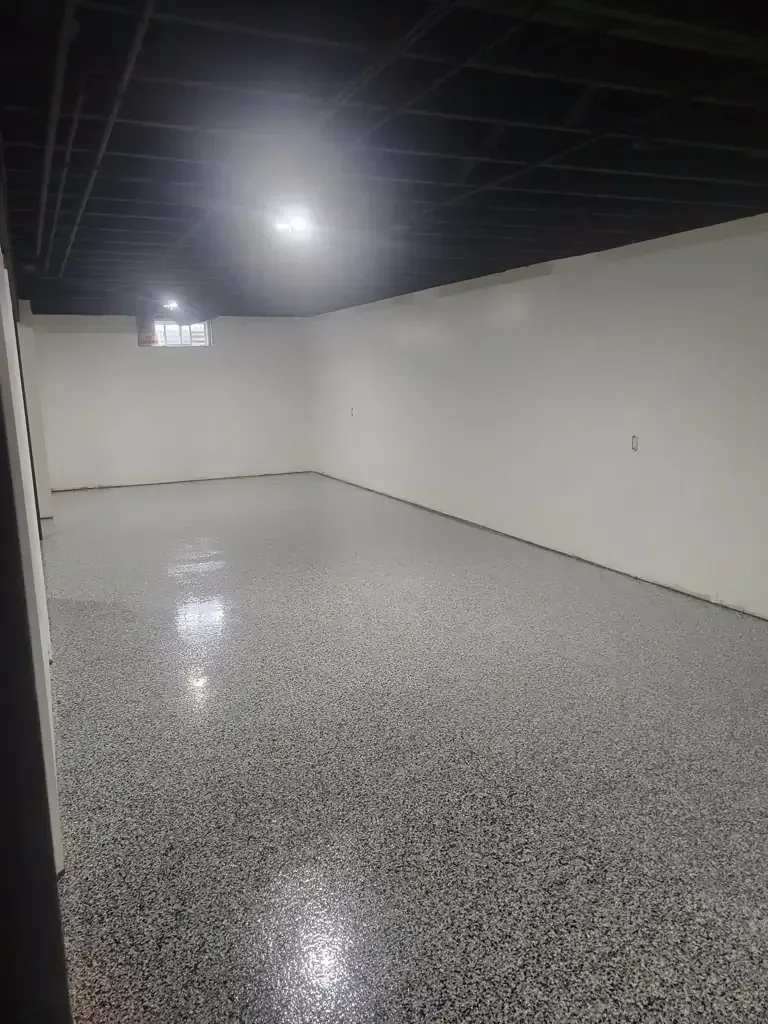
Yes, often more so than in a newer home. Much of Chicago's housing stock, especially bungalow-belt homes built before modern waterproofing standards, has basements with little or no original moisture barrier, and Chicago summers regularly push humidity above 70%. Bare concrete in that kind of basement is prone to condensation and a musty feel even without a visible leak. A properly sealed epoxy floor gives that concrete the vapor barrier it was likely never built with, though if you have active water intrusion rather than just humidity, that needs to be addressed before any coating goes down.
What is a metallic epoxy floor?
A metallic epoxy floor uses a metallic pigment that moves as the coating cures, creating a swirled, marbled, three-dimensional look no two floors share. It is popular in showrooms, salons, retail spaces, and high-end living areas where the floor is part of the design. Because it takes more material and skill to install, a metallic finish sits at the higher end of the epoxy price range, but it delivers a look a solid color cannot match.
How durable is a flake epoxy floor?
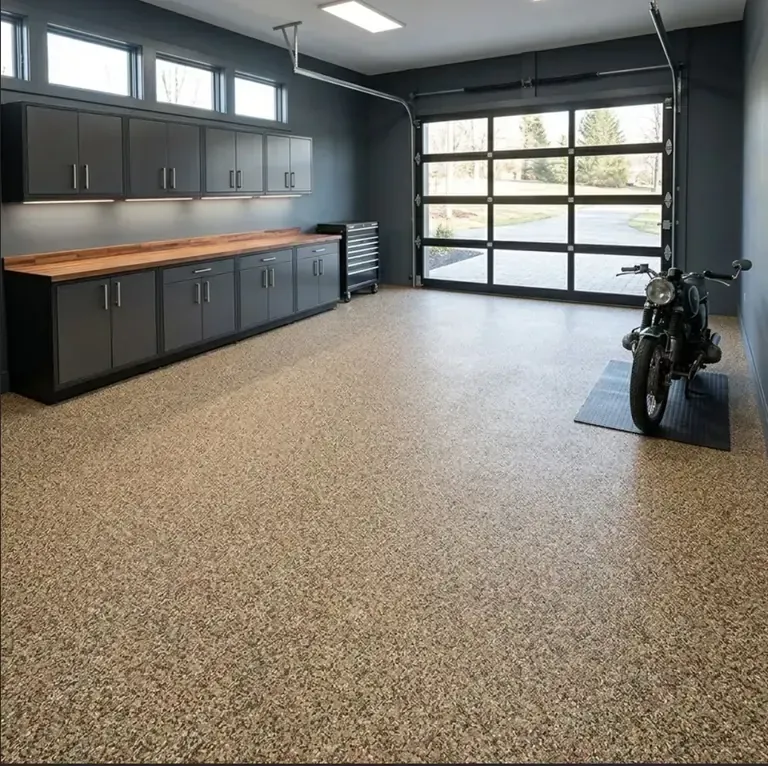
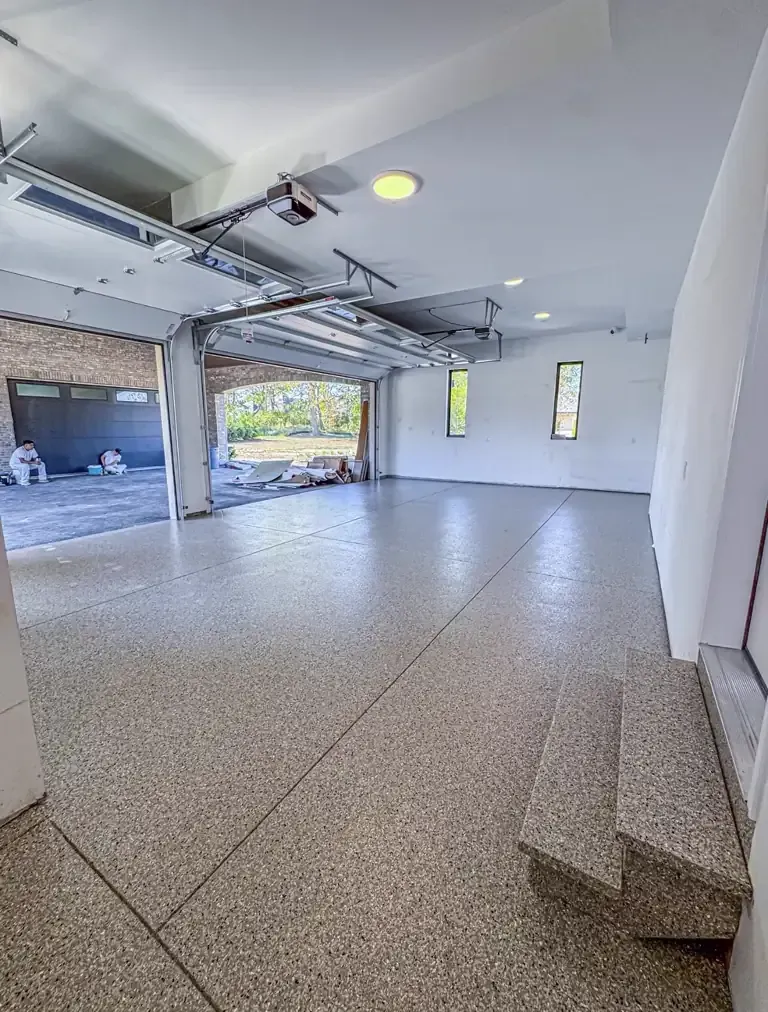
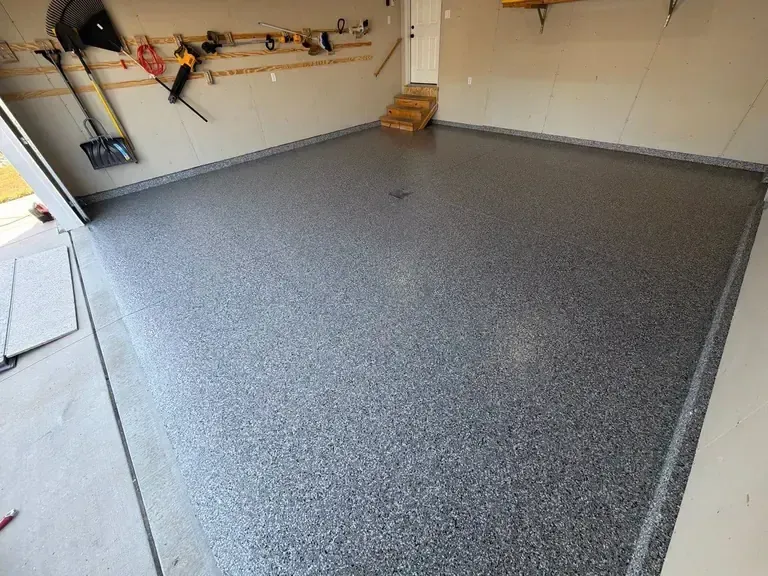
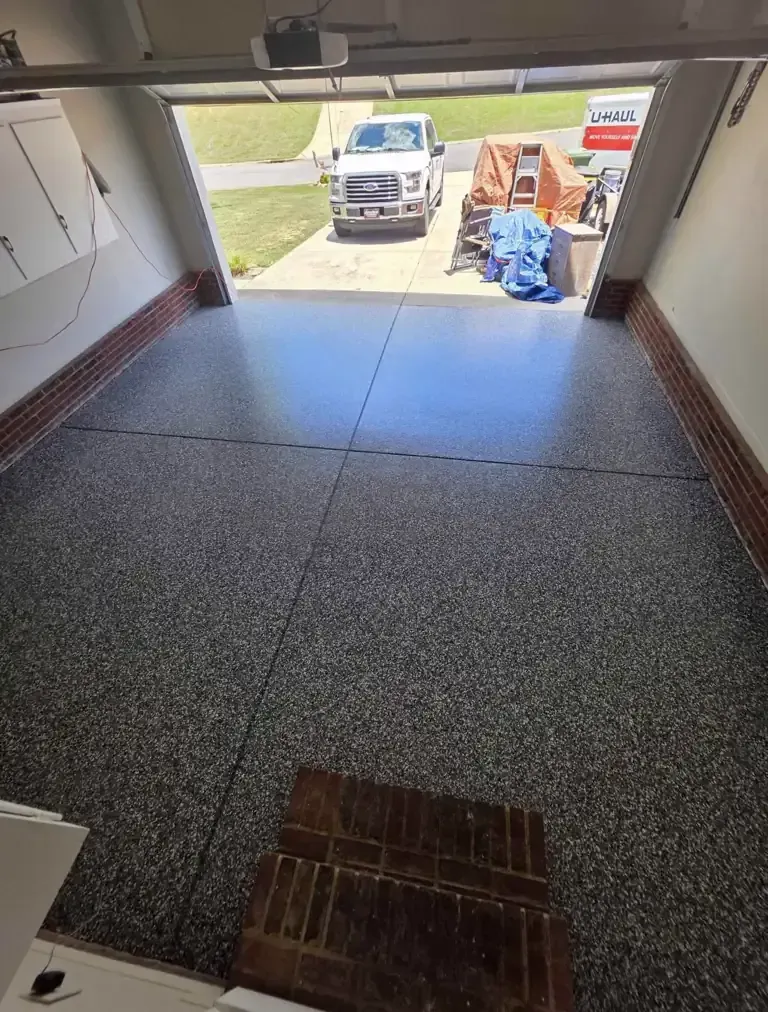
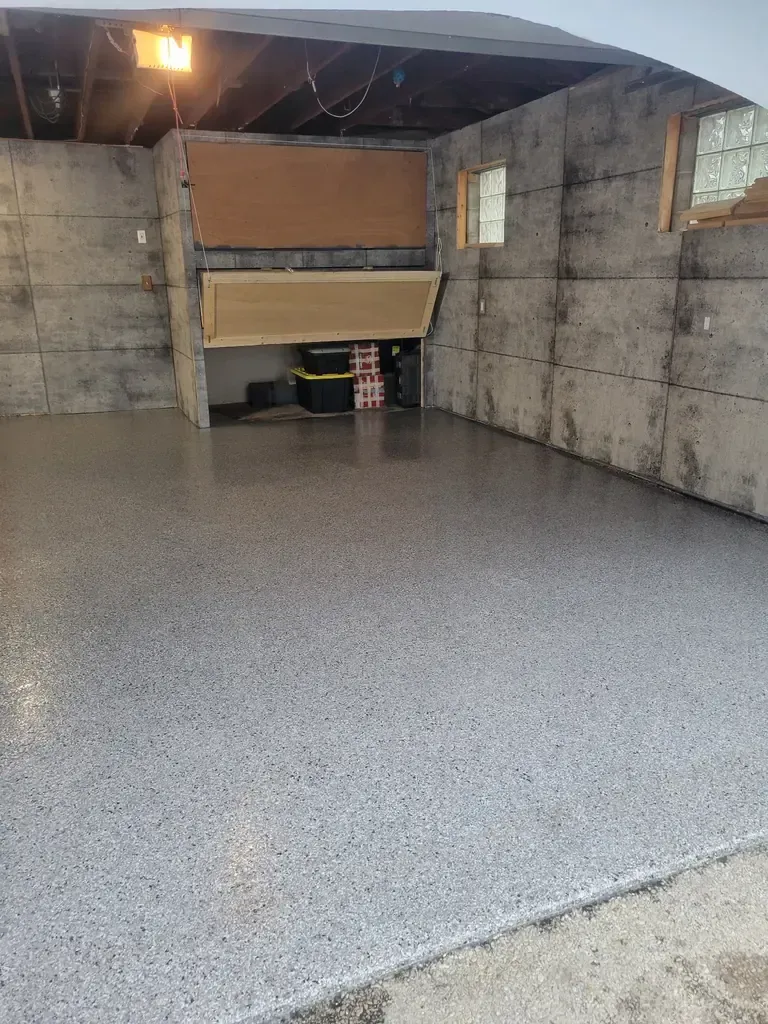
Very. A flake epoxy floor broadcasts color chips into the coating, which adds texture, hides minor slab imperfections, and provides slip resistance. On garage floors, we seal it under a polyaspartic top coat, so it stands up to vehicle traffic, dropped tools, and the moisture swings common in Chicago garages and basements. Flake is the most popular residential finish because it balances durability, looks, and value, and the color blends match almost any space.
What is the difference between flake and metallic epoxy?
Flake floors use color chips broadcast into the coating for a textured, speckled look that hides wear, which makes them ideal for garages and basements. Metallic floors use pigments that swirl during curing for a smooth, marbled, high-end look better suited to showrooms and living spaces. Flake is more forgiving and usually less expensive; metallic is more decorative and sits higher in price. The right pick depends on the room and the look you want.
Which epoxy finish is best for a garage?
For most Chicago garages, a flake (broadcast) system is the best finish. The color chips add grip and hide minor cracks and stains, and every garage floor we coat is finished with a polyaspartic top coat that resists UV yellowing and adds a protective layer. A solid color works for a tighter budget, while a metallic finish is usually chosen for showrooms or living spaces rather than a working garage. A free consultation confirms the right system for your slab.
How much does epoxy flooring cost per square foot?
Most Chicago epoxy floors run about $6 to $18 per square foot installed, all-in with prep, base coat, and top coat. Flake systems run about $6 to $8, solid color about $8 to $12, commercial solid color about $6 to $10, and metallic and designer finishes are highest at about $10 to $18. The biggest variable is the condition of your existing concrete, since cracks, pitting, and moisture add prep work. A free estimate gives you an exact figure for your space.
How much does it cost to epoxy a 2-car garage?
A standard 2-car garage of about 400 to 500 square feet typically runs roughly $2,500 to $4,000 installed for a flake floor, depending on how much the slab needs before coating. A solid color sits near the low end, while a flake or metallic build sits higher. Repairing salt damage, cracks, or heavy oil staining adds to the total. Every garage floor we coat includes a polyaspartic top coat as standard, so that protection is built into your estimate rather than added later.
Is there a minimum project size?
Yes. Every project has a $2,500 minimum. Our grinders, dust extractors and crew cost the same to bring out for a small floor as for a big one, so small jobs like a one-car garage, a landing or a set of steps are priced at the $2,500 minimum. Larger floors are priced by the square foot.
Does concrete repair add to the cost of an epoxy floor?
Yes. Cracks, pitting, spalling, and heavy staining have to be ground out and repaired before any coating goes on, and that adds labor and material to the job. It is also the step that decides whether the floor lasts, since coating over damaged concrete is one of the most common reasons an epoxy floor fails early. During your free estimate we check the slab and tell you exactly what repair your floor needs, so there are no surprises once work begins.
Why does professional epoxy flooring cost more than a DIY kit?
A DIY kit prices only the product in the box. A professional epoxy floor prices the full system: mechanical grinding, crack and surface repair, primer, base coat, your chosen finish, and a UV-resistant top coat applied by a trained crew. Most DIY kits go on as a thin coat over lightly cleaned concrete, which is why they often start lifting within a season or two. The higher upfront cost pays for prep and materials built to hold up for years.
How long before I can walk on and park on my new garage floor?
Cure times depend on the system and the weather, but as a general guide most residential epoxy floors are ready for foot traffic within about 24 hours and vehicle traffic within a few days. We confirm the exact timeline for your specific floor at the final walkthrough, so nothing gets driven on before it has fully cured.
Is my garage or basement a good candidate for epoxy?
Most residential concrete floors in the Chicago area are good candidates once they are properly prepped. Older slabs with freeze-thaw cracking, prior sealers, or oil staining need mechanical grinding rather than a light acid etch, and basements with active water intrusion need that addressed before any coating goes down. We evaluate the slab during the free estimate and tell you honestly what your space needs.
Can you match a specific color, design, or team logo in the floor?
Yes. Custom color blends, metallic and designer finishes, and personalized designs like a team or business logo worked into the floor are some of our most popular residential projects, particularly in man caves and finished garages. These custom finishes are more labor-intensive than a standard flake system, which we walk through with you before work begins.
Do you need to grind down the concrete in an older Chicago home?
Usually, yes. Epoxy needs a rough, porous surface to bond to, and most existing garage and basement floors in older Chicago-area homes already have some freeze-thaw wear, old sealers, or staining that a simple acid etch will not fully address. Mechanical grinding opens the surface and removes contaminants, which is what keeps the coating from peeling or flaking down the road.
Can you work around our business hours to minimize downtime?
Yes. For commercial installs we schedule around your operating hours wherever possible, and we walk through the full timeline before work begins so you know exactly how long the space will be out of use. Because each coat has to fully cure before the next, we plan the sequence to keep your closure window as short as the system allows.
How durable is commercial epoxy under heavy foot traffic and equipment?
Commercial and light-industrial epoxy systems are engineered to resist impact, heavy loads, and constant wear for years rather than seasons. For warehouses and high-traffic spaces we typically install a solid-color or industrial-grade system built for durability over aesthetics, with slip-resistant additives available where floors see wet or high-traffic conditions.
Is epoxy a good fit for a commercial kitchen or food-service space?
Front-of-house commercial spaces like showrooms, salons, retail floors, and dining areas are an excellent fit for epoxy. Commercial kitchens and food-prep areas have specific temperature, moisture, and food-safety requirements that often call for a specialized urethane or cementitious system rather than standard epoxy, so we scope those honestly during the estimate rather than promising a fit that would not hold up.
How long before we can reopen after a commercial floor is installed?
It depends on the size of the space and the system installed, but we confirm foot-traffic and full-use cure times at the walkthrough. We plan the install schedule around getting you reopened as quickly as the coating allows, and we never rush cure times, since that is what protects the finish and your investment.
Is it cheaper to polish concrete or install epoxy?
It depends on the slab and the finish you want. Polishing refines the concrete you already have, so it uses very little added material and is often the more economical choice for large commercial and industrial floors in good condition. Epoxy adds a bonded coating on top, which costs more in material but unlocks color, flake, and metallic finishes and a fully sealed surface. The most accurate way to compare the two for your space is a free on-site estimate, where we assess the slab and your goals and give you real numbers for each option.
How much does polished concrete cost?
Polished concrete is priced per project rather than by a flat rate, because the cost depends on the condition of your existing slab, the square footage, the level of sheen you want, and how much grinding and prep the floor needs first. Larger, cleaner slabs are usually the most cost-efficient to polish, while floors with cracks, old coatings, or heavy staining need more prep. The clearest way to get an accurate figure for your space is a free estimate, where we walk the floor and scope the work before quoting.
Can I polish concrete myself?
Concrete polishing is a mechanical, multi-stage process that uses progressively finer grits and specialized equipment to refine and harden the surface, so it is difficult to achieve a consistent, professional result as a DIY project. An uneven polish, missed prep, or the wrong grit sequence shows plainly once the floor reflects light. For a durable, even finish, especially on commercial and industrial floors, professional polishing is the reliable route. We are happy to assess your slab and tell you honestly what level of finish it can reach.
What is the difference between polished concrete and a concrete coating?
Polished concrete is a finish created from the slab itself, refined and hardened through grinding and a penetrating topcoat, with very little added material. A concrete coating, such as epoxy, is a separate product bonded on top of the slab that creates a new sealed surface and opens up colors and decorative finishes. Polishing gives you a natural, light-reflective concrete look with minimal maintenance; a coating gives you a specific color or a fully sealed finish. Which one fits depends on the look, durability, and maintenance you want for the space.
Related
Keep exploring.
Epoxy flooring FAQ
Epoxy flooring questions we hear most
This epoxy flooring FAQ collects the questions Chicago homeowners and businesses ask most: how much epoxy flooring costs, how long a garage floor coating lasts, whether epoxy works in a damp basement, and how polished concrete compares.
The short version: prep is everything, a polyaspartic top coat beats a basic epoxy top coat for garages, and every price should come from someone who has seen your slab.
Still have a question about epoxy floor coatings or concrete polishing? Call or text, or book a free on-site assessment.